
Hugo Harrer
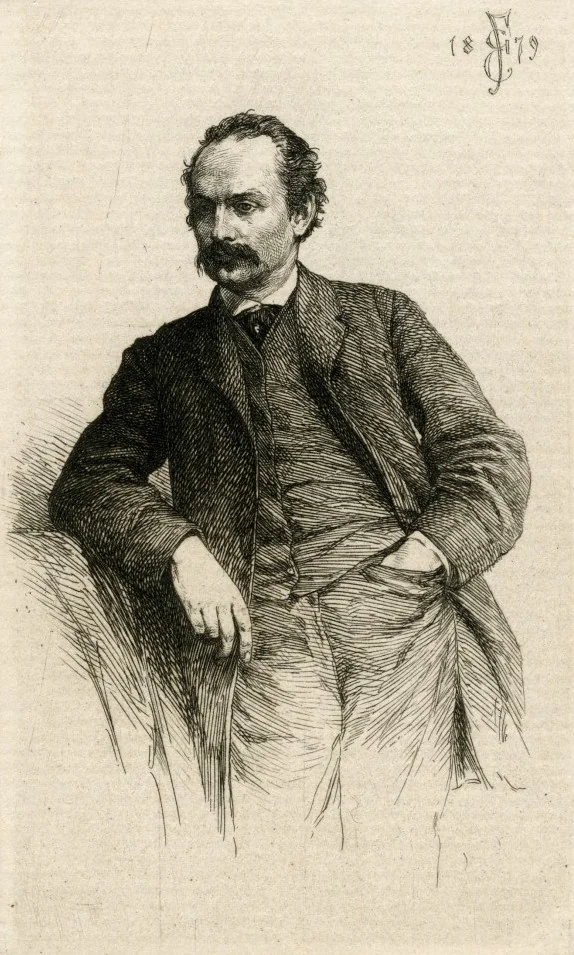
Image from Wikipedia
Image from Wikipedia
Hugo Harrer: The Precise Gaze of a Düsseldorf Landscape and Architectural Painter
An Artist between Nature Observation, Architecture, and Realistic Painting
Hugo Paul Harrer was a German landscape and architecture painter of the Düsseldorf School, born on February 6, 1836, in Eberswalde and died on December 10, 1876, in Rome. His name is synonymous with a painting style that combines precise nature observation, craftsmanship, and a clear realistic approach. Biographical records portray him as an artist who early on departed from a career in architecture that had originally been intended for him and dedicated himself entirely to the fine arts. (de.wikipedia.org)
Biography: From a Planned Architect to a Self-Taught Painter
According to the biographical details from the German Biography, Harrer was initially supposed to become an architect but soon turned to painting. He did not attend an art academy and did not work permanently in a master's studio; instead, he shaped himself as a self-taught artist through independent study, careful observation of nature, and repeated visits to friends' studios. This independent training shapes the image of an artist who consistently developed his painterly language by himself. (deutsche-biographie.de)
Sources provide differing information about his birthplace: while the German-language Wikipedia states Eberswalde, the German Biography mentions Hirschberg in Silesia. This discrepancy shows that Harrer's life is not documented in every historical detail, but his classification as a painter of the Düsseldorf School is firmly established. His death in Rome is also a confirmed biographical fact. (de.wikipedia.org)
Artistic Development: Realism as an Attitude
In art historical characterization, Harrer appears as a "thoroughly modern realist." This formulation describes an approach that does not aim for decorative effects but for the most accurate reproduction of what is seen. His working method shows how closely observation, composition, and painterly execution were intertwined for him. (deutsche-biographie.de)
The proximity to nature observation is central for understanding his work. Particularly among landscape painters of the Düsseldorf School, the connection between atmospheric mood and precise detail fidelity played a significant role, and Harrer integrated himself into this tradition with his own signature. The fact that he developed without formal academy training enhances the impression of an artist who defined himself through practice, sharp observation, and endurance. (deutsche-biographie.de)
The Düsseldorf School and Harrer's Place in Art History
As a representative of the Düsseldorf School, Harrer belongs to a movement that became particularly known in the 19th century for landscape motifs, narrative clarity, and carefully composed pictorial spaces. In this environment, the connection between mood and precise execution gained particular significance, and Harrer's focus on landscape and architectural painting fits precisely into this tradition. His works can thus be read as part of a broader European realism movement that takes the visible seriously in its structural order. (de.wikipedia.org)
The architectural component of his oeuvre refers to his initial career path and simultaneously explains his special sensitivity to line, proportion, and spatial construction. An artist painting architecture needs not only a sense of perspective but also an understanding of stability, rhythm, and the effect of surfaces in pictorial space. In Harrer's case, this sensitivity intertwines with landscape observation to create a visual language that is sober yet lively. (de.wikipedia.org)
Work and Reception: A Painter with a Quiet but Significant Profile
There is no grand museum fame preserved for Harrer's work in the existing sources, yet he is recognized as a "capable painter." This description from the German Biography indicates a solid level of craftsmanship and artistic reliability. For art historical classification, this is important: not every significant position in the 19th century is defined by spectacular innovation; often, its strength lies precisely in the consistent execution of a clear aesthetic program. (deutsche-biographie.de)
Harrer's death in Rome rounds out the image of an artist whose career path led to the international art metropolis of the time. Rome was a central place for exchange, study, and artistic self-assurance in the 19th century, and Harrer's death there signifies the mobility of many German artists of his generation. Even though the sources regarding individual works remain limited, the biographical accounts clearly indicate a serious, independently developed painting career. (de.wikipedia.org)
Cultural Context: Why Hugo Harrer is Still Interesting Today
Hugo Harrer is intriguing for contemporary art lovers because he exemplifies how artistic identity in the 19th century could be shaped outside academic institutions. His journey from aspiring architect to self-taught painter makes him a figure of perseverance and disciplined self-study. The interplay of landscape, architecture, and realism possesses an aesthetic appeal that makes his historical significance comprehensible. (deutsche-biographie.de)
For art history, Harrer remains a name that reveals the working methods of the Düsseldorf School in a personal, less canonical form. He represents the precise gaze, the reliability of execution, and the trust in observation as the artistic foundation. Anyone interested in German painting of the 19th century will find in Harrer a quiet but characterful representative of this era. (de.wikipedia.org)
Conclusion: An Independent Realist with a Sense of Space, Nature, and Precision
Hugo Harrer captivates with his consistent dedication to painting, his self-taught development, and his clear realistic approach. His biography combines craftsmanship with artistic independence, and therein lies his enduring allure. Anyone engaging with the Düsseldorf School and German landscape and architectural painting of the 19th century should take a closer look at Hugo Harrer. (deutsche-biographie.de)
Official Channels of Hugo Harrer:
- Instagram: no official profile found
- Facebook: no official profile found
- YouTube: no official profile found
- Spotify: no official profile found
- TikTok: no official profile found
Sources:
- Wikipedia - Hugo Harrer
- Deutsche Biographie - Harrer, Hugo
- Deutsche Biographie - Harrer, Hugo (English version)
- Wikipedia - Harrer (Name page)
- Wikipedia: Image and text source