
Pan Walther
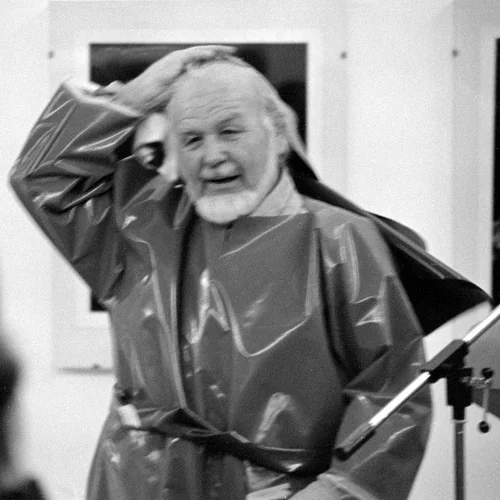
Image from Wikipedia
Image from Wikipedia
Pan Walther: The Photographer Who Shaped German Photography with Precise Visual Language
A Master of Portrait Photography Between Dresden, Münster, and Dortmund
Pan Walther (* November 10, 1921, in Dresden; † November 14, 1987, in Bangkok) was one of the defining German photographers of the post-war era and consciously referred to himself as a "Lichtbildner" (light-image maker). His work focused not only on portrait and landscape photography but also on education, teaching, and the transmission of photographic thought to the next generation. His artistic biography combines craft precision, experimental image design, and a clear pedagogical aim into a body of work of lasting cultural significance. ([de.wikipedia.org](https://de.wikipedia.org/wiki/Pan_Walther?utm_source=openai))
Biography: From Dresden to Münster
Walther grew up in Dresden, where he early on developed his distinct attitude towards photography, engaging with painters and sculptors in his surroundings. After training at the school of photography, he opened a studio in Dresden in 1946 with Christine Bellmann; in 1950, the couple moved to Münster for political reasons and established a new studio there, which existed until 1985. This phase marked the beginning of a lengthy period in which Walther worked not only as a photographer but also as a formative teaching figure in the West German photography scene. ([de.wikipedia.org](https://de.wikipedia.org/wiki/Pan_Walther?utm_source=openai))
From the beginning, his understanding of photography was more artistic than merely documentary. The term "Lichtbildner" reflects his belief that images do not simply occur but are created through the conscious shaping of light, perspective, and staging. This attitude makes Pan Walther today a key figure at the intersection of classic portrait tradition and modern photographic authorship. ([kunstraum-muenster.de](https://kunstraum-muenster.de/2021/12/30/stadtmuseum-muenster-pan-walther/?utm_source=openai))
Career: Teacher, Professor, and Helper in the Development of Photography
After moving to Münster, Walther began teaching at the Werkkunstschule Münster in 1951. In 1954, he spent a year in Cologne, teaching as an artistic lecturer at the State Higher School of Photography, before returning to the West and further expanding his teaching activities. His career thus extended beyond his own studio to also focus on the institutional development of photography in Germany. ([de.wikipedia.org](https://de.wikipedia.org/wiki/Pan_Walther?utm_source=openai))
Walther became particularly influential through the establishment of the photography program at FH Dortmund, which he shaped and influenced with his expertise. Later, he also developed the Photo and Film Design program at the Werkkunstschule Dortmund and served as a professor there. This made him a central figure in photographic education in North Rhine-Westphalia, whose impact extended well beyond individual phases of work. ([de.wikipedia.org](https://de.wikipedia.org/wiki/Pan_Walther?utm_source=openai))
In Dortmund, he developed a distinctive teaching philosophy known as "Foto elementar," which involved the photographic exploration of a decommissioned mining site in Dorstfeld. This work exemplifies how Walther translated spatial, social, and aesthetic realities into a dense photographic form. His teaching combined hands-on practice, image awareness, and a clear conception of photographic responsibility. ([de.wikipedia.org](https://de.wikipedia.org/wiki/Pan_Walther?utm_source=openai))
Work and Visual Language: Portraits, Landscapes, and Photographic Experimentation
Walther's oeuvre encompasses portraits, landscapes, and photographic works that stand out for their mix of clarity and poetic openness. The German Society for Photography describes his work as inventive, creative, experimental, and playful; simultaneously, his images featured renowned personalities such as Otto Dix and Willy Brandt alongside landscapes and travel impressions. This range showcases a photographer who took the medium seriously in all its forms of expression. ([dgph.de](https://www.dgph.de/ausstellungen/pan-walther-magie-des-lichts-fotografien-von-1942-bis-1987?utm_source=openai))
In portrait photography, Walther developed a unique style. He worked with nuanced lighting, variable perspectives, and a calm, concentrated image dramaturgy that neither smoothed out nor over-staged his subjects. His photographs aim for presence rather than pose, endowing his sitters with a dense, often almost sculptural dignity. ([kunstraum-muenster.de](https://kunstraum-muenster.de/2021/12/30/stadtmuseum-muenster-pan-walther/?utm_source=openai))
Over the years, landscape and travel photography took on an increasingly significant role. Travels to Les-Saintes-Maries-de-la-Mer, Greece, Yugoslavia, Spain, and Iceland broadened his perspective and led to images where atmosphere and sense of space play a central role. Therefore, Walther's photographic work is never one-dimensional but balances between portraiture, documentary observation, and aesthetic condensation. ([de.wikipedia.org](https://de.wikipedia.org/wiki/Pan_Walther?utm_source=openai))
Awards, Memberships, and Recognition in the Field
In 1969, Walther was inducted into the German Society for Photography and the Federation of Freelance Photo Designers; the following year, he became chairman of that organization. These recognitions attest to his influence not only in teaching but also within the professional photographic community. His role ranged from individual authorship to contributing to the professional culture. ([de.wikipedia.org](https://de.wikipedia.org/wiki/Pan_Walther?utm_source=openai))
Additionally, connections to prominent institutions and exhibitions placed his work within a broader art historical context. The City Museum of Münster referred to him as one of the most important portrait photographers in Germany after World War II; the DGPh also dedicated an exhibition to him. Such accolades emphasize how deeply his visual language is rooted in the history of German photography. ([stadt-muenster.de](https://www.stadt-muenster.de/museum/ausstellungen/pan-walther-1921-1987-lichtbilder?utm_source=openai))
Artistic Development and Cultural Influence
Walther's significance lies not only in his subjects but also in his attitude towards photography as a visual discipline. He understood the photograph as a consciously composed form, the result of light management, compositional guidance, and technical care. In doing so, he positioned himself against a purely mechanical understanding of the medium, placing photography on par with other visual arts. ([kunstraum-muenster.de](https://kunstraum-muenster.de/2021/12/30/stadtmuseum-muenster-pan-walther/?utm_source=openai))
His influence also extended into the photographic education of several generations. Numerous later photographers were shaped by his teaching and methodological rigor, and he remains present in the photographic memory culture of Münster and Dortmund. The fact that exhibitions and research contributions regularly shed new light on his work illustrates the ongoing relevance of his artistic development. ([tu-dresden.de](https://tu-dresden.de/tu-dresden/newsportal/ressourcen/dateien/universitaetsjournal/uj_pdfs/uj_1997/UJ04-97.pdf?utm_source=openai))
The connection of portrait art, landscape observation, and didactic ambition makes Pan Walther an extraordinary figure in German photography. His images convey concentration, respect for the other, and a deep conviction that good image-making is also a form of thinking. In this lies the enduring strength of his oeuvre: it is quiet, precise, and extraordinarily compelling in its reduction. ([dgph.de](https://www.dgph.de/ausstellungen/pan-walther-magie-des-lichts-fotografien-von-1942-bis-1987?utm_source=openai))
Conclusion: Why Pan Walther Remains Fascinating Today
Pan Walther captivates as an artist, teacher, and image thinker who significantly influenced German photography after 1945. His work combines technical confidence with human closeness, his teachings shaped photographic practice well beyond Münster and Dortmund, and his portraits possess an extraordinary presence to this day. Anyone interested in the history of photography, visual language, and artistic education encounters a central personality here. Pan Walther remains a name that should not only be known but continually rediscovered in exhibitions and publications. ([stadt-muenster.de](https://www.stadt-muenster.de/museum/ausstellungen/pan-walther-1921-1987-lichtbilder?utm_source=openai))
Official Channels of Pan Walther:
- Instagram: No official profile found
- Facebook: No official profile found
- YouTube: No official profile found
- Spotify: No official profile found
- TikTok: No official profile found
Sources:
- Wikipedia: Pan Walther
- City of Münster – Museum: Pan Walther (1921–1987) – Light Images
- German Society for Photography – Pan Walther: Magic of Light
- StO Münster – Image History Pan Walther
- City Museum Münster – Exhibition on Pan Walther
- LEO-BW – Walther, Pan
- TU Dresden – University Journal 1997
- Wikipedia: Image and text source