
Marteria
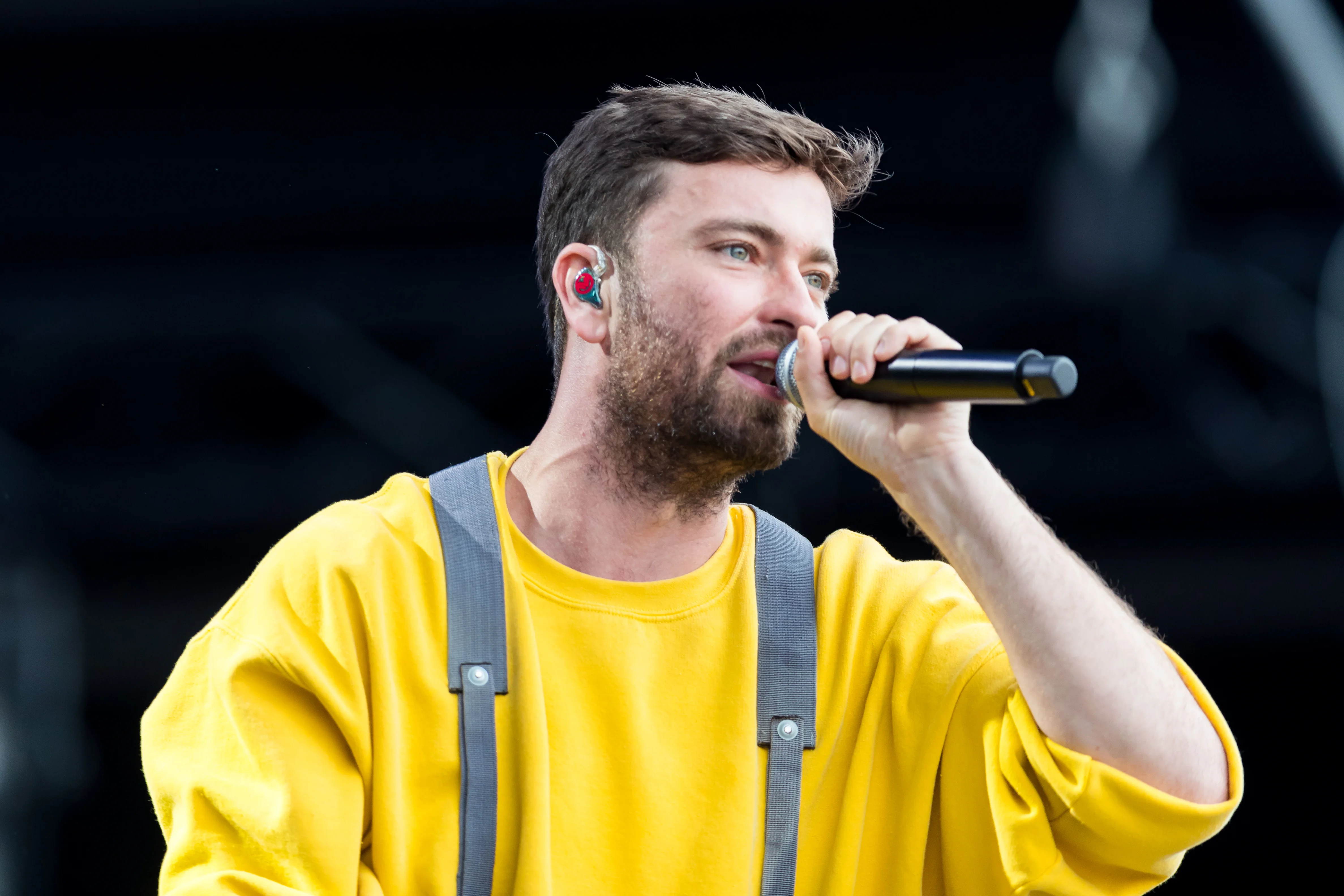
Image from Wikipedia
Image from Wikipedia
Marteria: German Rap Between Pop Appeal, Friction, and Stadium Size
An Artist Who Shaped a Whole Generation from Rostock
Marteria, real name Marten Laciny, is one of the most influential voices in German rap and pop-rap of the last two decades. Born on December 4, 1982, in Rostock, he developed an artistic identity early on that goes far beyond traditional hip-hop roles. His career combines street poetry, chart success, pronounced stage presence, and a desire to continually redefine German pop culture. ([de.wikipedia.org](https://de.wikipedia.org/wiki/Marteria?utm_source=openai))
Biography: From Sports Talent to Charismatic Rapper
Before conquering the big stages, Marteria's journey took him through football and modeling. He played in the youth team of Hansa Rostock and even was part of the U17 national team before choosing a life with more artistic freedom. This biographical mix of discipline, physicality, and outsider perspective continues to shape his music and public persona to this day. ([munzinger.de](https://www.munzinger.de/register/portrait/biographien/marteria/02/1715?utm_source=openai))
He emerged in the German hip-hop scene at an early age. At 16, as a member of the group Underdog Cru, he released his first recording on the album Maximum under the label P.O.sin-music. Later, he moved to Berlin, where he began studying acting while simultaneously laying the foundations for a music career that focused on versatility rather than a template. ([de.wikipedia.org](https://de.wikipedia.org/wiki/Marteria?utm_source=openai))
The Breakthrough with Attitude and Recognizability
The real breakthrough came in 2004 with his debut album, and by the time of Zum Glück in die Zukunft, Marteria became a name that resonated outside the hip-hop bubble. The songs combined clear hooks, melodic production, and imagery that oscillated between melancholy, irony, and urban energy. ARD Kultur describes him as a personality who has operated on multiple levels simultaneously: rapper, performer, and pop figure. ([ard.de](https://www.ard.de/ardkultur/musik/hiphop/hip-hop-mit-charisma-living-in-a-marteria-world%2Cmarteria-living-in-a-marteria-world-doku-jan-delay-paul-ripke-joko-winterscheidt-100.html?utm_source=openai))
His career gained additional depth through the alter ego Marsimoto. The pitched voice, experimental approach, and playful distance opened up a second artistic axis that remains part of his overall impact today. That this project arose from a technical effect illustrates how deeply Marteria understands production, sound colors, and role changes as part of his musical development. ([de.wikipedia.org](https://de.wikipedia.org/wiki/Marteria?utm_source=openai))
Musical Development: Between Rap, Pop, and Futuristic Narratives
Marteria's style thrives on contrasts. On one hand, there are clear rap structures, precise rhymes, and pointed observations of everyday life; on the other hand, there are anthemic choruses, electronic textures, and a pop sensibility that makes his music radio-friendly yet quirky. This balance has established him as an artist capable of bridging the scene audience and the mainstream in the German-speaking world. ([allmusic.com](https://www.allmusic.com/artist/marteria-mn0002317412?utm_source=openai))
His lyrics often revolve around self-assertion, origins, nightlife, longing, and the question of how identity is shaped in a loud present. His language remains direct, vivid, and often cinematic, ensuring that even grand pop gestures never feel hollow. The production of his albums frequently employs strong hooks, emotional tension arcs, and a clarity quickly recognizable as characteristic in German rap. ([laut.de](https://laut.de/Marteria?utm_source=openai))
The Key Albums and Singles
Important milestones in his discography include Base Ventura (2007), Zum König geboren, Zum Glück in die Zukunft (2010), Zum Glück in die Zukunft II (2014), Roswell (2017), 1982, and 5. Dimension (2021). Even the choice of titles demonstrates how consistently Marteria works on a unique world where visions of the future, origins, and pop mythology intertwine. ([marteria.com](https://www.marteria.com/))
Some of his most famous songs include Lila Wolken, Kids (2 Finger an den Kopf), OMG!, Endboss, Verstrahlt, Welt der Wunder, and Niemand bringt Marten um. Notably, Lila Wolken became a cross-generational hit and exemplifies his ability to combine urban coolness with mass appeal. Spotify still lists the song among his most popular titles, underscoring the lasting impact of his catalog. ([open.spotify.com](https://open.spotify.com/embed/artist/3nDNDLcZuSto4k9u4AbcLB?theme=0&utm_source=openai))
Successes, Charts, and Cultural Influence
His commercial success is remarkable: According to Wikipedia references to record awards, Marteria has sold over 3.8 million music units. This isn't just a number but a testament to the reach of a career that has long since penetrated pop culture, starting from its rap core. Critical voices from music media repeatedly emphasize that despite his broad reach, his sound retains charisma and uniqueness. ([de.wikipedia.org](https://de.wikipedia.org/wiki/Marteria/Diskografie?utm_source=openai))
The press has early on classified him as an exceptional phenomenon. AllMusic points to collaborations with artists like Peter Fox, Jan Delay, and Miss Platnum, while laut.de highlights his dual-track development between rap and acting, and between the scene and public. This breadth makes Marteria an artist whose cultural influence extends far beyond individual hits. ([allmusic.com](https://www.allmusic.com/artist/marteria-mn0002317412?utm_source=openai))
The Alter Ego Marsimoto: An Artistic Character with Its Own Cosmos
With Marsimoto, Marteria created not just a side project but a standalone aesthetic world. The voice is distorted, the perspective shifted, the humor quirkier, and the production more experimental. Through this, he was able to explore themes and sounds that might have found less space in his main project, Marteria. ([de.wikipedia.org](https://de.wikipedia.org/wiki/Marteria?utm_source=openai))
The Marsimoto discography ranges from Halloziehnation to Zu zweit allein, Grüner Samt, Ring der Nebelungen, and Verde to the album KEINE INTELLIGENZ, released in 2024. BMG labeled this work as the final album of the project and stated that 2024 would be the last chance to experience Marsimoto live. This concludes an important chapter in Marteria's overall work. ([open.spotify.com](https://open.spotify.com/artist/6jL3G5P8rxfUamkyqmRJNU?utm_source=openai))
Current Projects: The Future Continues
2025 and 2026 mark a new phase in Marteria's career. On his official website, Zum Glück in die Zukunft III is listed as the current album, along with singles like Babylonia, L.I.E.B., MEINS!, Sad Holiday (Schwarzer Sand), and 9 Leben (Eins übrig). BMG announced the album for March 27, 2026, presenting it as a continuation of an iconic trilogy. ([marteria.com](https://www.marteria.com/))
Marteria also remains active live. The official website announces an arena tour for October 2026, with stops in Münster, Cologne, Berlin, Hamburg, Leipzig, Stuttgart, Munich, Frankfurt, and Hanover. This further confirms that his music operates not only in the studio but also unleashes its full force on large stages. ([marteria.com](https://www.marteria.com/))
Perceptions: Why Marteria Has Such Strong Impact
Media and listeners repeatedly describe Marteria as charismatic, trendsetting, and unusually versatile. n-tv emphasizes the evolution from initially non-mainstream rapper to established pop star, whose hits play beyond traditional hip-hop channels. This transformation makes him intriguing for music lovers, as it demonstrates how consistently he prioritizes artistic development over mere formulas. ([n-tv.de](https://www.n-tv.de/leute/musik/Roswell-ist-Marteria-in-Bestform-article19850175.html?utm_source=openai))
His work connects timing, hooks, attitude, and imagery into a clear signature. Whether in anthemic tracks, introspective moments, or within the Marsimoto cosmos: Marteria remains an artist who has broadened German rap with a pop sensibility, imagination, and presence. Those who follow his development recognize a music career that draws strength from origins, work, and creativity. ([allmusic.com](https://www.allmusic.com/artist/marteria-mn0002317412?utm_source=openai))
Conclusion: An Artist Between Energy, Narrative, and Live Magic
Marteria is exciting because he never just fills one role. He is a rapper, pop singer, storyteller, performer, and, with Marsimoto, also the architect of a second sound world. His discography shows a constant artistic evolution, his influence deeply penetrates German pop and rap history, and his current work proves that he continues to look forward even in 2026. Anyone who wants to experience German music with attitude, melody, and genuine stage charisma should see Marteria live. ([marteria.com](https://www.marteria.com/))
Official Channels of Marteria:
- Instagram: No official profile found
- Facebook: No official profile found
- YouTube: No official profile found
- Spotify: https://open.spotify.com/intl-it/artist/3nDNDLcZuSto4k9u4AbcLB
- TikTok: No official profile found
Sources:
- Marteria - Official Website
- Wikipedia - Marteria
- Wikipedia - Marteria/Diskography
- ARD Kultur - Hip-Hop with Charisma: Living in a Marteria World
- BMG - Marsimoto Announces Final Album, Releases New Single
- BMG - Marteria: Zum Glück in die Zukunft III
- AllMusic - Marteria Biography, Discography, Albums & Expert Reviews
- laut.de - Marteria
- Spotify - Marteria Artist Profile
- Wikipedia: Image and Text Source