
Franz (Pommern)
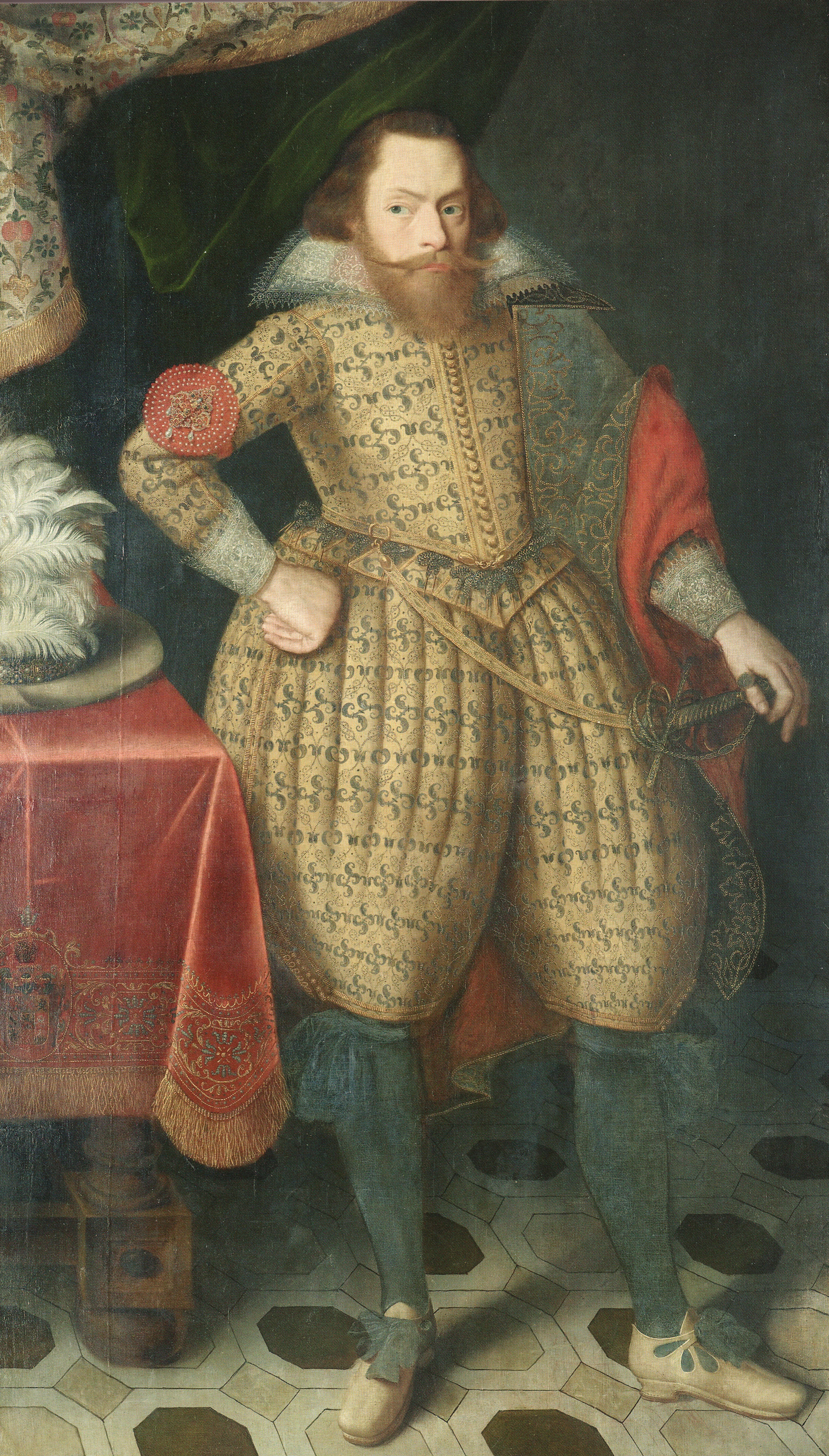
Image from Wikipedia
Image from Wikipedia
Franz of Pomerania: Power, Education, and Political Responsibility in the Duchy of Pomerania-Stettin
A Prince between Court, Church, and Territorial Politics
Franz of Pomerania, born on March 24, 1577, in Barth and died on November 27, 1620, in Stettin, was one of the defining figures of the Pomeranian high nobility during the early modern period. As Duke of Pomerania-Stettin and Bishop of Cammin, he operated within a tension-filled framework of dynastic duty, ecclesiastical responsibility, and territorial politics. His biography tells the story of a man who was oriented early on towards administration, representation, and military matters, and whose actions shaped the final phase of the Griffin era. (de.wikipedia.org)
Background, Education, and Early Influences
Franz was the son of Duke Bogislaw XIII and his first wife, Clara of Brunswick-Lüneburg. His father ensured the best possible education, and early on, interests in chivalry and military affairs emerged. However, the planned career at the court of Saxony was interrupted by Johann Friedrich, who brought Franz into the Diocese of Cammin. This decision connected his background from a ruling house with a church and political career that quickly led him into the leadership circles of Pomerania. (de.wikipedia.org)
From Coadjutor to Bishop of Cammin
In 1592, Franz was appointed as Coadjutor of the Diocese of Cammin and participated in the National Synod in 1593. A year later, a trip took him to Vienna and Hungary, and later he participated under Archduke Matthias in the Siege of Gran. After a stay in Italy, he returned to Pomerania in 1596. When his uncle Casimir renounced the bishopric, Franz was consecrated as bishop in 1602 in the Cathedral of Cammin; his residence was then established in Köslin, which he equipped accordingly. (de.wikipedia.org)
Travel, Military, and European Experience
Franz's path was not limited to quiet administration. In 1604, the King of Sweden offered him the supreme command of 1,000 cavalry and 3,000 foot soldiers during the Swedish-Polish War, but Franz declined to maintain Pomerania's neutrality. In 1607, he undertook another journey that took him through Prague, Switzerland, and France to the Spanish border; on the return trip, he visited England, Scotland, and the Netherlands. These movements across Europe acquainted him with different political systems, court cultures, and military realities. (de.wikipedia.org)
Government in Pomerania-Stettin and Late Power Phase
After the childless death of his brother Philipp II in 1618, Franz took over the government of Pomerania-Stettin, while the Diocese of Cammin passed to his brother Ulrich. He sought to strengthen the state's defense capabilities, but encountered resistance from the estates. They refused both to equip the Stettin armory and to allow a muster that had been called for November 1619 at Pützerlin. Nonetheless, Franz focused intensely on governance matters and the city of Stettin, carefully reviewing documents and was regarded as popular due to his amiable and kind nature. (de.wikipedia.org)
Political Daily Life, Conflicts, and Religious Environment
Franz’s reign occurred during a time of increasing tensions between dynastic authority, territorial interests, and confessional self-understanding. He did not share the scholarly interests of his predecessor Philipp II; geographical or land-historical works like the Pomeranographia received little support from him. Instead, he focused on immediate ruling practice, on control, order, and securing his territories. These priorities show a prince who emerged more as an administrator and political actor rather than as a scholar. (de.wikipedia.org)
The Episode of Sidonia von Borcke
During Franz’s tenure, the famous witch trial against Sidonia von Borcke from the Monastery of Marienfließ also took place. She was accused of causing the early deaths of the dukes Philipp II and Georg, as well as the childlessness of the remaining sons of Bogislaw XIII through witchcraft. The accused was sentenced to death on September 1, 1620, and executed at the end of the month. Less than two months later, Franz himself fell ill after lunch, although he had been healthy in the morning, and died a few days later. (de.wikipedia.org)
Marriage, Dynasty, and the End of a Line
In 1610, Franz married Sophie of Saxony, a daughter of Elector Christian I. The marriage was childless, thereby exacerbating the dynastic fragility of the Pomeranian ruling house. This lack of succession added historical weight to his reign, as it occurred during a period when the political future of Pomerania was already consolidating. Franz thus represents a ruler whose personal biography was closely intertwined with the structural limits of a late-dynastic principality. (de.wikipedia.org)
Style, Impact, and Historical Context
Franz of Pomerania was not an artist in the musical sense and left no discography, song lyrics, or stage career. His cultural value lies in the political and representative history of the Duchy of Pomerania-Stettin as well as in his role as Lutheran Bishop of Cammin. Sources portray him as a prince with careful office management, courtly education, and personal popularity among the people. This blend of representation, administration, and territorial responsibility continues to make him interesting for Pomeranian regional history to this day. (de.wikipedia.org)
Cultural Resonance and Source Materials
The documentation concerning Franz is closely tied to Pomeranian historiography, including representations in the Journal for Culture and History as well as older biographical literature. The existing web links and references to printed literature also show that his life is primarily received as part of the regional noble, church, and territorial history. For a modern artist page in a musical journalistic sense, he does not offer a pop, rock, or classical catalog, but certainly a historically rich, culturally relevant biography. This very contrast makes the case of Franz of Pomerania noteworthy. (de.wikipedia.org)
Conclusion: Why Franz of Pomerania Remains Historically Fascinating
Franz of Pomerania captivates as a figure between rule, reform, and transition. He embodies the last generation of a principality that had to contend with military, ecclesiastical, and territorial conflicts. Those interested in the history of Pomerania, court culture, and the political mechanisms of the early modern period will find in him a central figure. There is no live experience to be had, but his life story remains impressively present on the historical stage. (de.wikipedia.org)
Official Channels of Franz (Pomerania):
- Instagram: no official profile found
- Facebook: no official profile found
- YouTube: no official profile found
- Spotify: no official profile found
- TikTok: no official profile found
Sources:
- Wikipedia – Franz (Pomerania)
- Wikipedia – Franz of Pomerania, Vital Data and Biography
- DeWiki – Franz (Pomerania)
- RuWiki – Franz of Pomerania
- Wikipedia: Image and Text Source